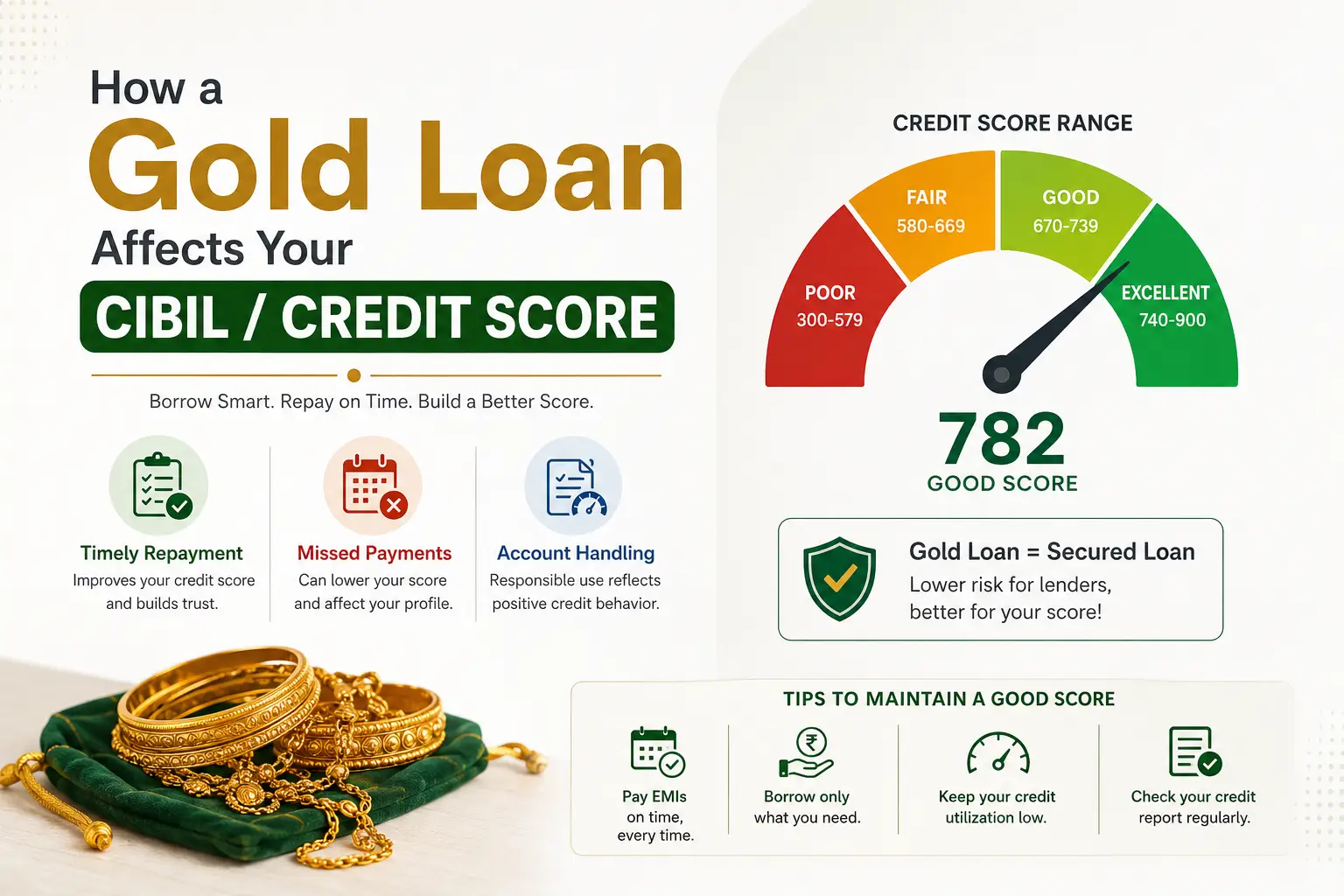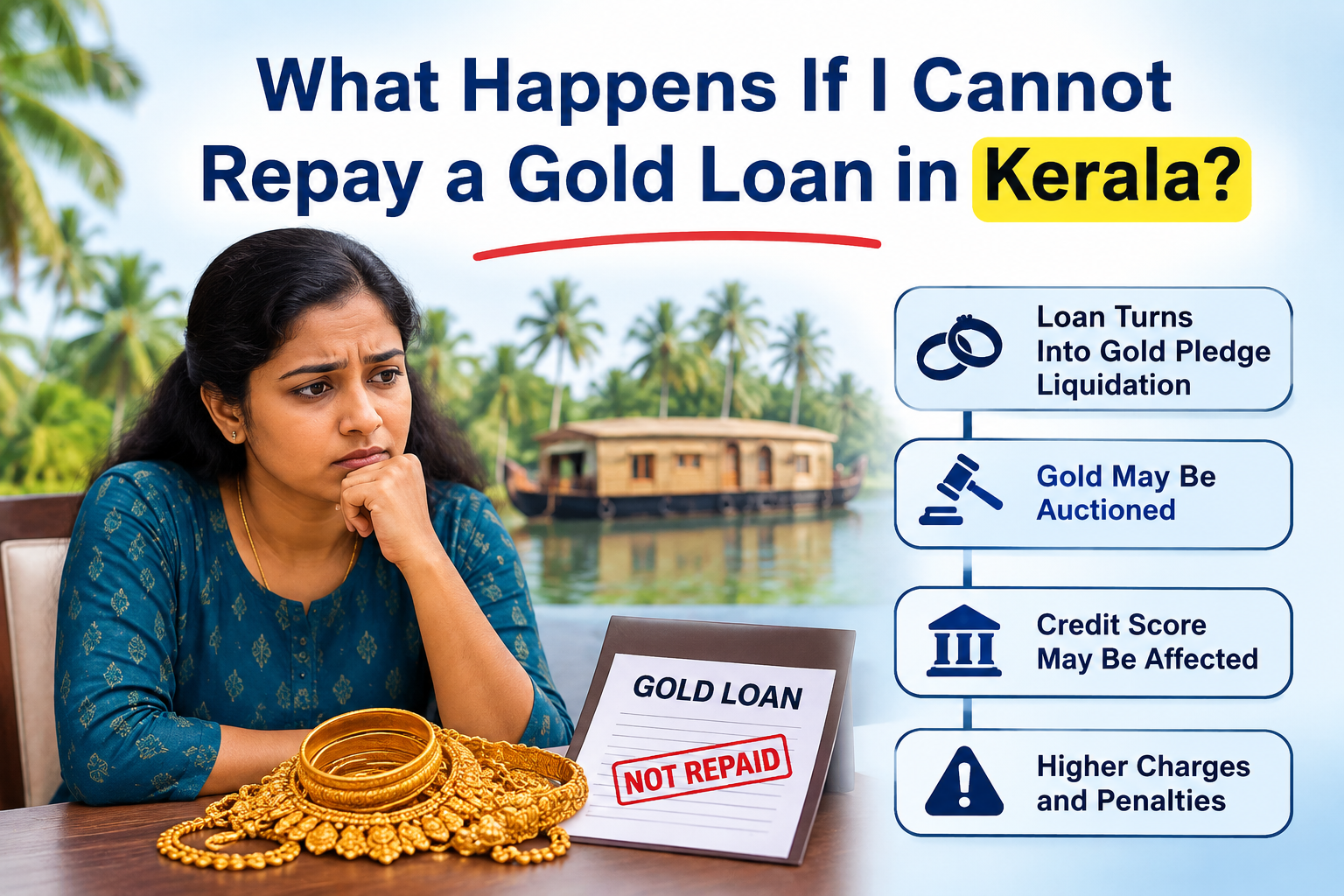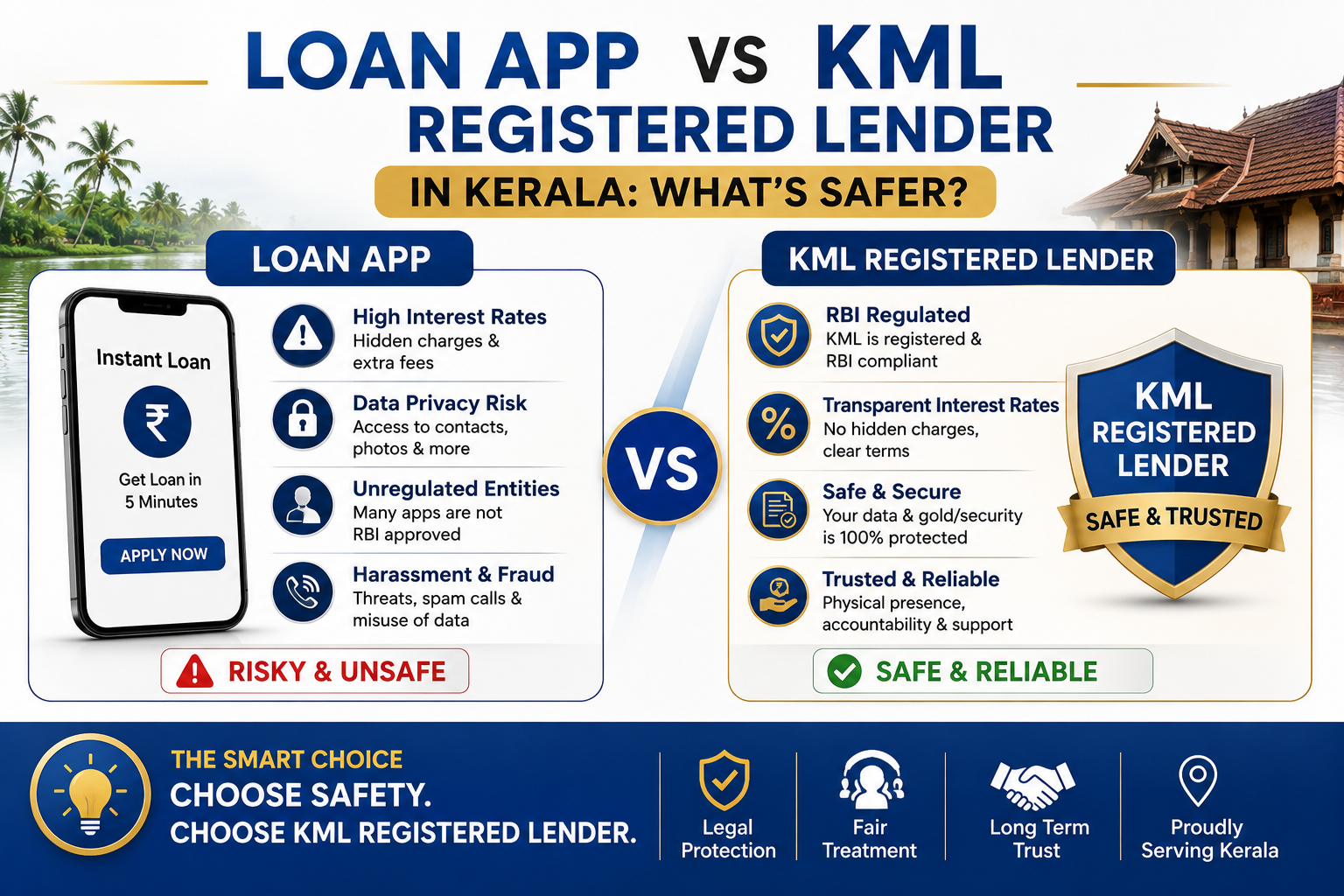
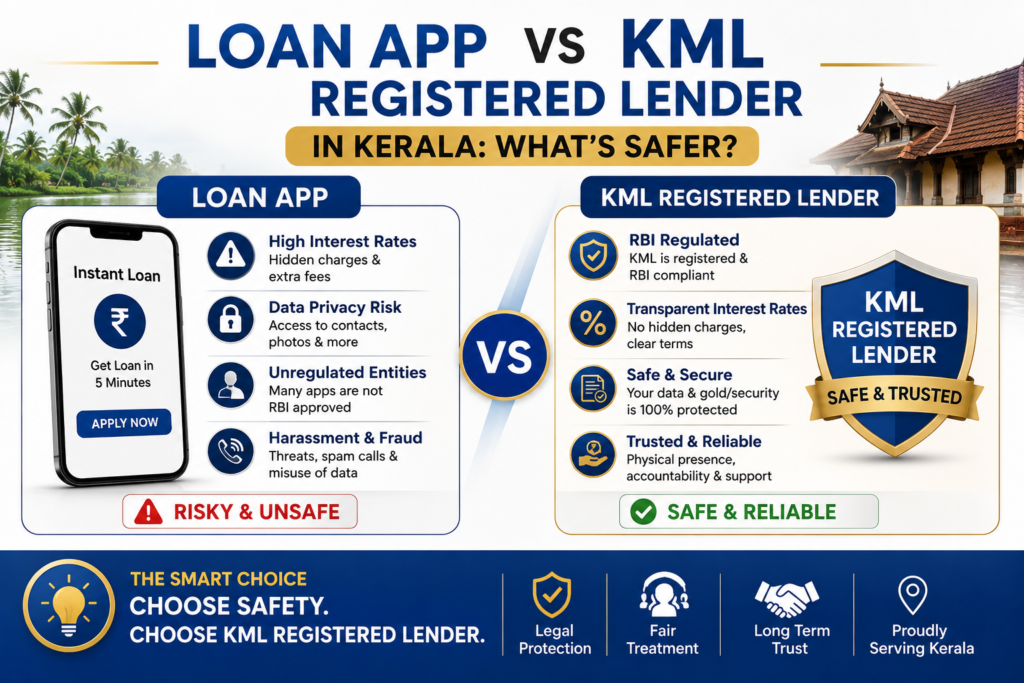
A slick app promising instant approval in five minutes feels a lot more convenient than visiting a physical branch — right up until the harassment calls start, or your personal photos get threatened for a small overdue payment. Understanding Loan App vs KML Registered Lender in Kerala honestly means looking past the convenience of instant apps toward what actually protects you as a borrower.
This isn’t a marginal concern. Unregulated loan apps have been linked to serious harassment, data misuse, and even tragic outcomes across India in recent years, prompting regulatory crackdowns and public warnings from financial authorities.
This guide walks through exactly what separates a genuinely regulated lender from a risky loan app, how to verify legitimacy before you borrow, and what protections you actually give up when convenience becomes the only deciding factor.
Are Loan Apps Safe in Kerala? An Honest Starting Point
The honest answer to whether are loan apps safe in Kerala depends entirely on one factor most borrowers never check: is the app actually licensed and regulated, or is it operating outside any legal framework entirely.
Why This Question Matters So Much
- Many loan apps operate without RBI registration or any recognized state licensing
- Some apps are fronts for entities based outside India with no accountability to Indian regulators
- The Reserve Bank of India has repeatedly warned the public about unauthorized digital lending apps
- Genuine, licensed digital lenders do exist — but they represent a small fraction of what’s actually available on app stores
The core issue isn’t “apps versus branches” — it’s regulation versus no regulation, and that distinction determines nearly everything else in this comparison.
Illegal Loan Apps India Risks: What Actually Happens
Understanding the genuine illegal loan apps India risks documented by regulators and consumer protection bodies helps clarify why this concern goes beyond typical loan comparison shopping.
Documented Risks From Unregulated Apps
- Excessive, undisclosed interest rates far beyond legal limits
- Access to phone contacts, photos, and personal data upon installation
- Harassment of the borrower’s contacts, not just the borrower themselves
- Threats involving morphed or misused photos to pressure repayment
- No legal recourse available since many operate outside any licensing framework
The Reserve Bank of India has issued repeated public advisories specifically warning against unauthorized digital lending apps, citing exactly these patterns of predatory behavior.
KML Registered Lender Meaning: Understanding Real Regulation
Before comparing further, understanding KML registered lender meaning in practical terms clarifies exactly what legal protection actually looks like.
What KML Registration Actually Represents
- Licensing under the Kerala Money-Lenders Act, 1958, a state-level regulatory framework
- Legal accountability to Kerala’s regulatory authorities
- Mandatory transparent disclosure of interest rates and loan terms
- Prohibition on unlawful recovery practices, harassment, or threats
A KML-registered lender like Abrus Krishna Finance operates within this legal structure, meaning every loan agreement, rate, and recovery practice is bound by enforceable regulation — not just company policy that can change without accountability.
Loan App Harassment Complaints: A Pattern Worth Understanding
Understanding the pattern behind loan app harassment complaints filed with consumer protection bodies and police across India reveals a consistent, troubling theme.
Common Complaint Patterns
- Recovery agents contacting family members, employers, and personal contacts without consent
- Threats of public humiliation using personal photos or contact lists
- Interest and penalty charges that escalate far beyond the original loan amount
- Continued harassment even after partial repayment or attempted settlement
These complaints have been serious enough to prompt government action, including app store removals and regulatory crackdowns on specific unauthorized lending platforms.
RBI Approved Loan Apps vs Unregistered: How to Tell the Difference
Understanding RBI approved loan apps vs unregistered alternatives requires knowing what genuine approval actually looks like, since many risky apps mimic the appearance of legitimacy.
How to Check Legitimacy
- Genuine NBFC-backed apps display their RBI registration number clearly
- The RBI maintains a public list of registered NBFCs that can be cross-checked
- Legitimate apps clearly display the name of their partner bank or NBFC, not just a generic app brand
- Absence of any verifiable registration information is itself a major warning sign
If an app can’t clearly answer “which regulated entity is actually lending this money,” that’s reason enough to stop the application process immediately.
Digital Lending App Risks Kerala: Local Context Matters
Understanding digital lending app risks Kerala borrowers specifically face helps connect this national pattern to local reality.
Why This Matters in Kerala Specifically
- Kerala has a strong tradition of regulated local lending through the Money-Lenders Act
- This existing framework means borrowers have a genuinely safer, established alternative readily available
- Choosing an unregulated app over a licensed local lender often means giving up protection that’s already accessible
Kerala borrowers specifically have less reason to gamble on unregulated apps, given how established and accessible KML-registered lending already is throughout the state.
Loan App Data Privacy Risks: What You’re Actually Agreeing To
Beyond financial terms, understanding loan app data privacy risks most borrowers never read carefully before installing reveals another significant concern.
Common Data Access Requests
- Full contact list access, often used later for harassment tactics
- Photo gallery access, sometimes misused for threats or blackmail
- SMS and call log access, extending well beyond what’s needed for a financial transaction
- Location tracking with no clear connection to loan servicing
A legitimate lender, digital or physical, only needs standard KYC information — ID proof, address proof, and basic financial details — never your entire phone’s contact list and photo gallery.
How to Verify a Licensed Lender Kerala: A Practical Checklist
Understanding how to verify a licensed lender Kerala borrowers should follow before applying anywhere protects you regardless of whether you’re considering an app or a physical lender.
Verification Steps
- Ask directly for the lender’s specific registration (KML number, or RBI NBFC registration)
- Request to see physical documentation or a certificate confirming this registration
- Check whether the lender has a genuine physical branch address you can visit
- Search for the lender’s name alongside terms like “complaint” or “harassment” before committing
- Confirm all terms are provided in writing before signing anything
A legitimate lender will never hesitate or grow defensive when asked to prove their registration — reluctance to answer this question directly is itself a red flag.
How to Check if a Lender Is Licensed: Where to Look
Building on verification steps, understanding exactly how to check if a lender is licensed gives borrowers concrete resources rather than just general caution.
Concrete Verification Resources
- KML-registered lenders should be able to show documentation tied to Kerala’s Money-Lenders Act registration
- RBI-regulated NBFCs appear on the RBI’s official list of registered entities
- Physical branch addresses can be verified independently, unlike app-only operations with no traceable location
- Local reputation and years of operating history offer additional, practical verification
Taking even fifteen minutes to verify a lender before borrowing is a small investment compared to the potential cost of dealing with an unregulated, harassment-prone alternative.
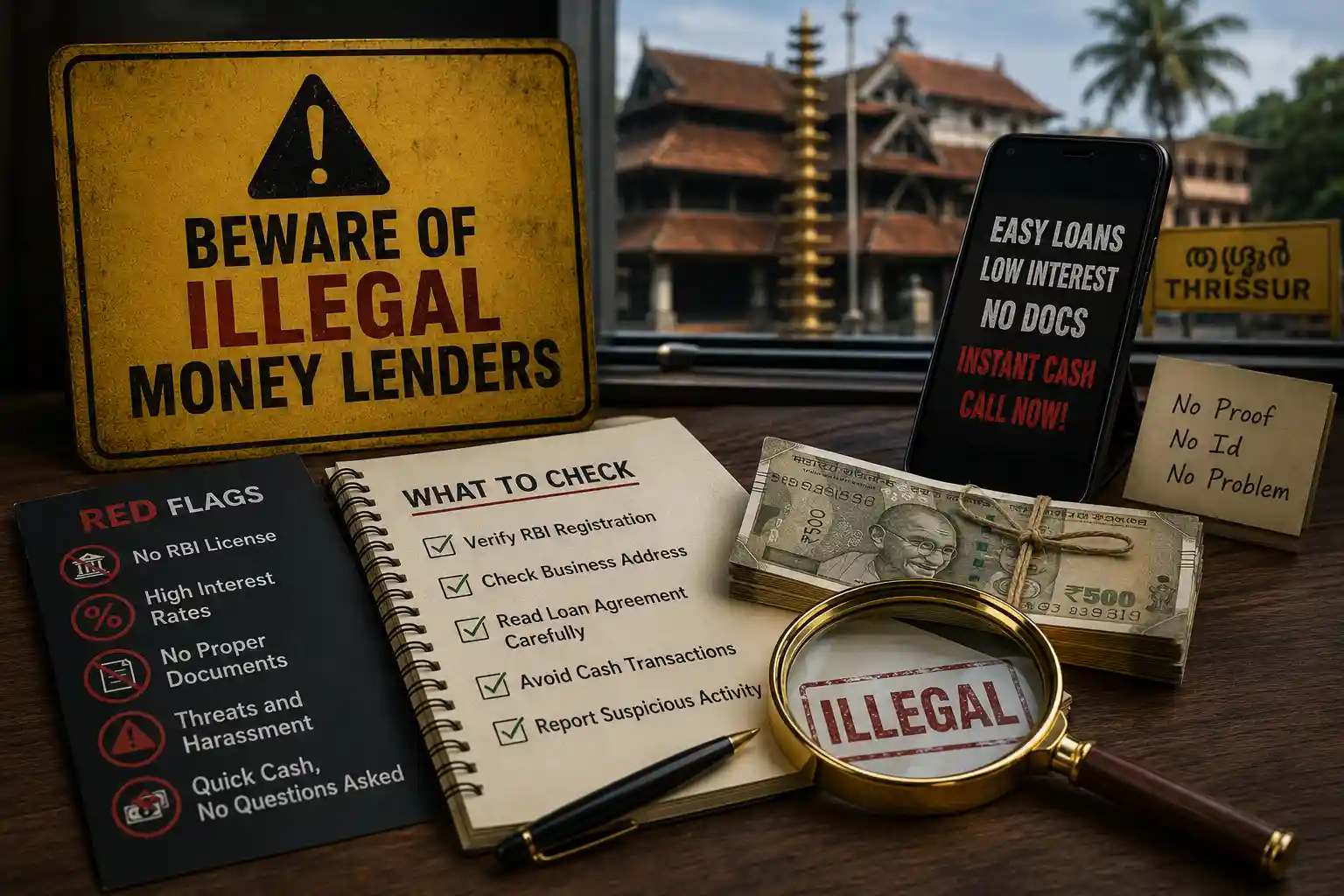
Predatory Lending Apps Warning Signs: Red Flags to Watch For
Understanding common predatory lending apps warning signs helps borrowers recognize danger before downloading, not after committing.
Warning Signs to Watch For
- Approval promised within minutes with virtually no verification process
- Excessive permission requests (contacts, photos, SMS) unrelated to loan servicing
- No clearly stated regulatory registration or licensed lending partner
- Interest rates or fees that aren’t transparently disclosed upfront
- Reviews or news reports mentioning harassment, threats, or data misuse
If an app exhibits even two or three of these signs, that’s sufficient reason to avoid it entirely, regardless of how urgently funds are needed.
Loan App Recovery Agent Harassment: What’s Actually Illegal
Understanding what constitutes illegal loan app recovery agent harassment helps borrowers recognize when their rights are genuinely being violated, regardless of loan default status.
What’s Not Legally Permitted, Even for Genuine Defaulters
- Contacting the borrower’s family, employer, or personal contacts without consent
- Threats involving personal photos, public humiliation, or blackmail
- Recovery calls or visits at unreasonable hours
- Physical intimidation or threats of violence
Even borrowers who have genuinely fallen behind on repayment retain legal protections against these specific practices — no legitimate debt justifies harassment tactics, and KML-registered lenders are explicitly bound against them.
Loan App Interest Rate Hidden Charges: The Real Cost Comparison
Understanding loan app interest rate hidden charges patterns commonly reported helps clarify why “instant approval” often comes at a steep, undisclosed price.
Common Hidden Cost Patterns
- Processing fees deducted upfront, reducing the actual disbursed amount below the agreed loan
- Daily or weekly interest rates that translate into extremely high annualized costs
- Penalty charges that compound rapidly, sometimes exceeding the original principal
- Terms buried in lengthy app permissions or fine print rarely read in full
Regulated lenders, by contrast, are legally required to disclose complete, transparent terms in writing before you sign — a protection unregulated apps simply don’t guarantee.
Gold Loan vs Loan App Kerala: A Safer Alternative for Quick Funds
For borrowers specifically drawn to loan apps because of speed, understanding gold loan vs loan app Kerala comparison reveals a genuinely safer path to fast funding.
Why Gold Loans Match App-Level Speed With Real Protection
- Approval and disbursement often happen within 15-30 minutes, comparable to app-based speed
- Full regulatory protection under the Kerala Money-Lenders Act
- No access to your phone contacts, photos, or personal data required
- A physical branch and verifiable identity behind the loan, not an anonymous app
For a detailed breakdown of how gold-backed borrowing compares against other formal credit options, our guide on Gold Loan vs Bank Loan in Kerala covers speed, documentation, and safety considerations in depth — the same safety principles apply even more strongly when comparing against unregulated apps.
Kerala Money Lenders Act Protection: What You’re Actually Guaranteed
Understanding the concrete Kerala Money Lenders Act protection borrowers receive with a properly registered lender clarifies exactly what’s at stake when choosing an unregulated alternative instead.
Legal Protections Under KML Registration
- Transparent, legally disclosed interest rates with no hidden escalation
- Prohibition on unlawful recovery practices, harassment, or threats
- Proper documentation and receipts for every transaction
- A legal, traceable entity accountable to state regulatory authorities
These protections exist specifically because informal and predatory lending has long been a documented problem — the Act was designed to prevent exactly the harm patterns now emerging through unregulated apps.
Safe Borrowing Options Kerala: What to Choose Instead
Bringing everything together, understanding genuinely safe borrowing options Kerala residents can access helps redirect urgency toward protection rather than pure speed.
Safer Alternatives to Unregulated Apps
- KML-registered gold loans — fast, secured, and fully regulated
- Licensed NBFC or bank personal loans — slower, but transparently regulated
- Verified digital lenders — only those clearly displaying RBI-registered NBFC partnerships
For those specifically weighing accessible options without traditional income documentation, our guide on gold loans without income proof in Thrissur shows how regulated lending can match the accessibility unregulated apps advertise, without the associated risk.
Frequently Asked Questions
1. Are all loan apps illegal or dangerous?
No, some digital lenders are genuinely RBI-regulated and safe, but a significant number operate without proper licensing — always verify registration before downloading or applying through any lending app.
2. What should I do if a loan app is already harassing me or my contacts?
Document all communication, report the app to local police and relevant consumer protection authorities, and be aware that harassment tactics like contacting your personal network are illegal regardless of your repayment status.
3. How quickly can I get funds from a KML-registered lender compared to an app?
Gold loans from KML-registered lenders often disburse within 15-30 minutes, comparable to app-based speed, but with full legal protection and no access to your personal phone data.
4. Why do loan apps ask for access to my contacts and photos?
Legitimate lenders don’t need this access for standard loan processing — this permission is commonly misused by predatory apps specifically for harassment and pressure tactics if repayment is delayed.
5. How can I verify if a lender, app or physical, is genuinely licensed?
Ask directly for their specific registration (KML number or RBI NBFC registration), request documentation, and verify against official regulatory lists — genuine lenders will never hesitate to confirm this information.
Final Thoughts
When comparing a loan app to a KML registered lender in Kerala, the honest answer is clear: regulation, not convenience, is what actually protects you as a borrower. Unregulated loan apps have been linked to serious, documented harassment and data misuse, while properly licensed lenders operate within legal frameworks specifically designed to prevent exactly these harms.
Considering a safer, fully regulated financing option? Visit the Abrus Krishna Finance to learn more about our KML-registered gold loan services, or contact our branch team directly to discuss transparent, legally protected borrowing.